Read Part One of The Power of Love
Read Part One of The Epidemics
In 2015, I began a novel that would fictionalize the story of my struggles caring for my mother, and how that impacted my life. Plus, I wanted to share how the Satisfaction Skills that my wife and I taught to teen patients at Buffalo Children’s Hospital had also improved our marriage; and how the Forgiving Myself, Others and God workshops we offered helped us to find peace. I also wanted to shine a spotlight on what I liked about the United Methodist Church, while expressing my opposition to their discrimination against homosexuals.
My starting point for the novel was a series of short stories about my mother and me that is now published as Caregiver Stories and Stress Solutions (click for audio summary) After it was honored with AARP’s Social Impact Award as “a simple mind-body-spirit program for seniors, adults and teens of any faith… or no faith,” I was motivated to write more.
I also wanted to reflect on how our spirituality was shaped by growing up as Catholics; our practice of Raj Yoga through the Himalayan Institute; and our ongoing study of A Course in Miracles. The opportunities to chair Older Adult Ministries for the Upstate NY Conference of the Methodist Church; and direct a Franciscan retreat center were invaluable. And I continue to learn and serve as a volunteer prayer chaplain at Unity of Buffalo.
Writing also gave me an opportunity revisit the pleasure of playing music with my wife and others (in a group very much like Friendship) for over forty years – and reflect on how we used music as a tool to explore the connection between the mind, body and the spirit.
I also wanted to draw from my experience directing programs in drug abuse prevention, mental health, health care and spiritual care – as well as directing wellness and disease management for a large managed care organization for ten years. I also served as clinical instructor of Psychiatry; an adjunct assistant professor in the School of Public Health and a research assistant professor of Family Medicine at the State University of New York at Buffalo, where I had earned a doctorate in health education and behavior.
“…Just the thought of forgiveness made me sick.”
My writing went well for the first six months.  Then I read that Pope Francis had visited the September 11th Museum at World Trade Center. While there, he viewed a Bible found fused to molten metal in the rubble of the Twin Towers. It was open to Christ’s “turn the other cheek” message of forgiveness.
“What?” I thought. “Forgive the terrorists who killed thousands that day? No way!” I was so shocked that just the thought of forgiveness made me sick. My characters in The Friendship Trilogy feel the same way.
In my original outline, I had planned to address the terror attack with a smug (but true) little story “about choosing love over fear” as we proceeded to plan our daughter’s wedding on that horrible day. But, now, I (and at least some of my characters) understand that “turn the other cheek” is good advice. It encourages us to choose “better vision” (i.e., seeing both the good and the bad to make better decisions) by using each of the Satisfaction Skills (awareness, appreciation, action/assertiveness, acceptance). Forgiveness is introduced on page 21 of Caregiver Stories, and is the theme of two stories: Grace and The Liturgy Nazi.
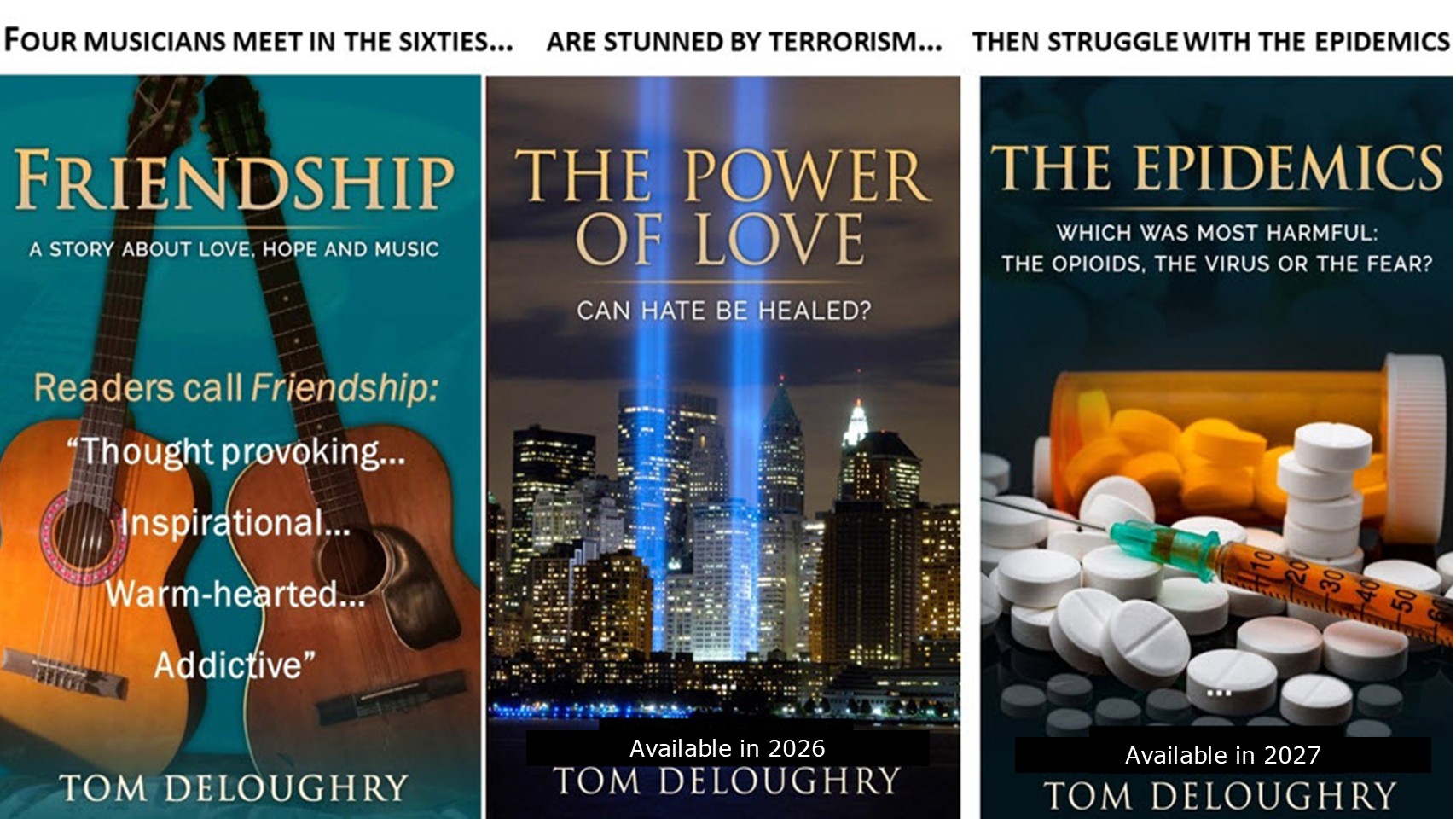
Over the past ten years, that jolt about forgiveness, and some related soul-searching, stimulated my story to grow into three novels: Friendship (available now); The Power of Love (available in November, 2026); and The Epidemics (July, 2027).
Historical Accuracies and a Lasting Lesson
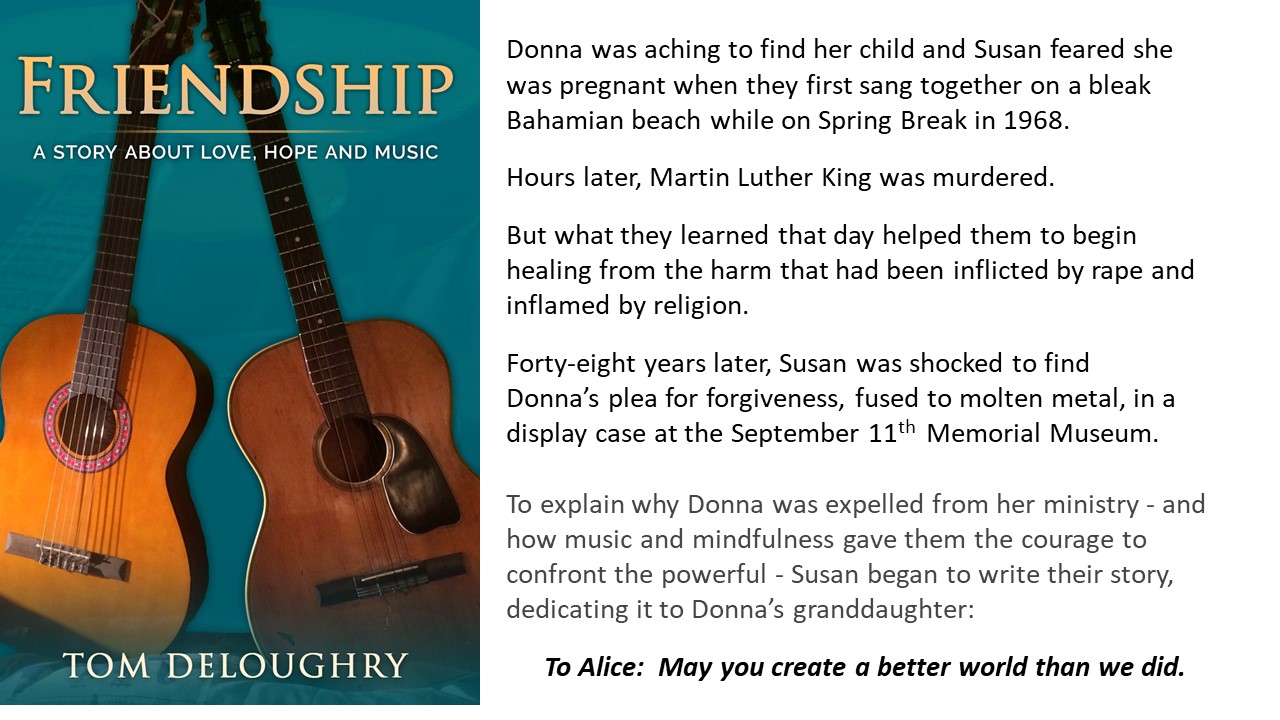
Friendship begins in the Bahamas because I visited there on spring break a few days after Dr. King’s death. The Bahamian police inspector who told Donna and Susan more than they wanted to know about torturing prisoners, and the missionary couple who took them on a jeep tour to “see the real Bahamas” were experiences I had. “Uncle Ansil” – Dr. King’s fishing guide at Bonefish Flats just before he won the Noble Peace Prize – is historically accurate; as is the politics of the Bahamian Progressive Liberal Party.
The third novel, The Epidemics” asks whether fear is a more damaging epidemic than either COVID or the opioids. It opens with “Finding the Holy Land” – a nearly verbatim account of why I abandoned a summer romance in Athens when I was offered a cheap ticket to fly to Israel. Although I hated much of what I saw at the holiest sites, the experience of being engulphed by Love at a sidewalk cafe in Tel Aviv still guides much of my life: “Before I visited the Holy Land I thought that God only lived in ancient places and sacred tabernacles. But now I knew that I could find the Holy Land without going anywhere at all.” And, those glimmers of Love sustained me through two deaths and a murder investigation during the years I served as the senior counselor at a storefront drug abuse center, as described in the Boulevard of Broken Dreams,
The Friendship Trilogy focuses on two questions: “How did that Bible get there?” and “What does it mean to forgive yourself, others and God in an era marked by civil rights, the Vietnam War, same-sex marriage, polarization, racism, terrorism and pandemics?

My characters search for a life of love on a journey that takes them to the Bahamas, Athens, Jerusalem, Bethlehem, Tel Aviv, Vietnam, Manhattan, Buffalo, Grand Island and Niagara Falls. Readers will go inside a storefront drug abuse clinic, the Buffalo Homicide squad, folk music venues, the adolescent floor at Buffalo Children’s Hospital, a faded ballroom where Islamic Sufi dancers laugh and whirl; the birthplace of Christ; the executive suite of a large managed care organization; Christian and Eastern retreat centers; the Capitol during the January 6th insurrection; and the communication office of the Governor of New York.